So here’s what happened…
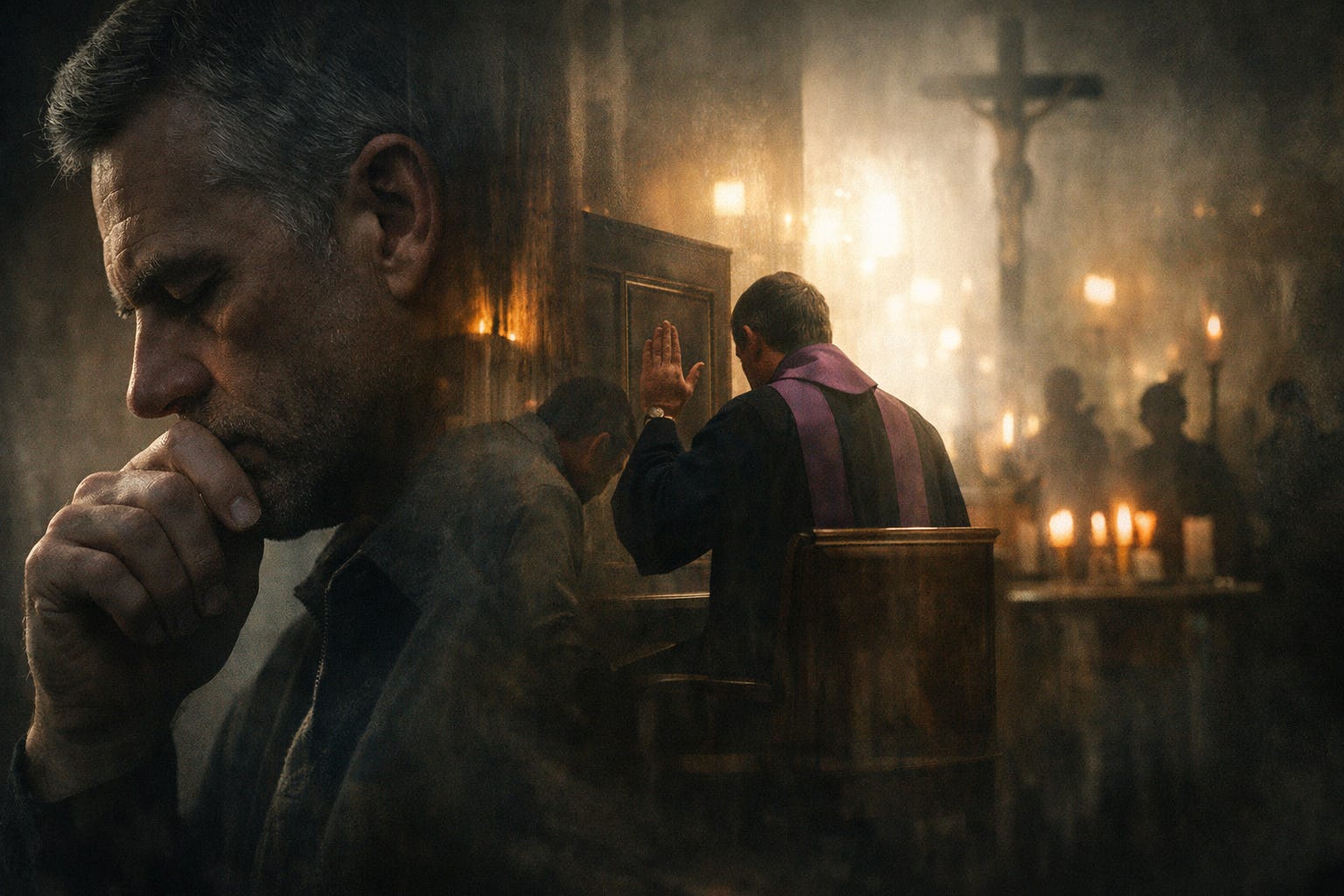
During Lent, I went to our parish for confession like many of you. It was a reconciliation event that featured 7 visiting priests as well as our pastor. Typically, I find the shortest line and wait my turn. I have grown to love the sacrament, and I do my best to examine my conscience and come to encounter God’s mercy.
When the door opened, I went into the small meeting room, met “Father John” for the first time, and proceeded to share my sins and remorse. After a brief pause, Father John asked if I’d be open to hearing what he sensed God was asking of me?
“Yes”. (what other response is there?).
He shared that the Holy Spirit was prompting him to challenge me to forgive people who were and are now in my life. He then led me to pray “Lord, show me those you are calling me to forgive”.
For my penance, he assigned me to listen to two podcasts that taught a strong process of lasting forgiveness (“Restore the Glory” episodes 67-68) once I discerned my list of those I needed to forgive.
All this surprised me. But it shouldn’t have. We need to seek forgiveness and are called to forgive others. The two go hand in hand.
Why we even started talking about this
Earlier this month, my “Men Answering the Heroic Call” podcast co-host Tom Hornacek and I felt strongly that we needed to devote an episode to talk candidly about the sacrament of reconciliation.
Research shows that nearly half of catholic men doubt and avoid this critical, grace-filled sacrament. So, here are two points about confession to affirm your practice to experience it, or challenge you to return to the confessional for the first time in long time.
1. Forgiveness isn’t a feeling, it’s a decision
First, forgiveness of others is not a mere feeling or passive acceptance of wrongdoing. It is an act of the will, rooted in grace, by which a person chooses to release resentment we feel and entrust justice to God.
It reflects the very nature of God Himself, who is “merciful and gracious, slow to anger, and abounding in steadfast love” (Psalm 103:8). When Catholics speak of forgiveness, we speak about participation in divine mercy l a conscious decision to love even if our emotions say otherwise.
2. Let’s be clear: this is what forgiveness is NOT
Second, it is important to clarify what forgiveness is not.
Forgiveness is not the denial of harm or pretending that evil did not occur. It does not mean excusing sin, abandoning justice, or allowing continued abuse. Tom made these points strongly on our podcast.
The Church never teaches that wrongdoing is acceptable; in fact, sin is taken with utmost seriousness. Nor does forgiveness always require reconciliation, which depends on repentance and trust.
One may forgive another internally, before God, even if a relationship cannot be restored. Forgiveness is also not a feeling that must come naturally; often, it is a difficult and repeated choice made in obedience to Christ.
RECOMMENDED READING



SPONSORED EVENT

Why forgiveness matters more than we think
Ever wonder why forgiveness matter so much to God? Because it is inseparable from love, and God is love.
In In the Lord’s Prayer, Jesus teaches us to say, “forgive us our trespasses, as we forgive those who trespass against us.” This is not poetic symmetry; it is a spiritual law.
To receive mercy, we must be open to giving it. God desires to heal the human heart, but unforgiveness hardens it, creating a barrier to grace.
When we cling to resentment, we place ourselves outside the flow of divine mercy. Forgiveness restores that flow, freeing both the offender and the offended in different ways.
Why this hits men differently
Is it harder for me? I think so.
We guys are formed and to value strength, justice, and self-reliance. While these are not inherently wrong, they can make forgiveness feel like weakness.
To forgive may seem like surrendering control or diminishing the seriousness of the offense. Men may also struggle to articulate or even acknowledge emotional wounds, and that will make the process of forgiveness harder.
Men also desire justice. We often like to exact our own justice, swiftly,
It’s easy to say but true, lasting forgiveness is not weakness but courage. It requires humility, honesty, and faith. It asks a man to confront his wounds, relinquish his desire to do “unto another” and trust in God’s justice and mercy.
Doing this, at least trying to, gets us closer to being the man God created us to be.
A question worth asking yourself
I realize here is so much more that can be said here about our makeup as men and the sacrament of reconciliation.
I am inspired today because I was given a holy wake-up call at my recent confession, and I don’t think it was meant for me alone. It was personal to me, of course.
Yet, are you open to asking God if there is anyone in your past or present whom you need to forgive? Does God want to take the weight of that off your shoulders?
If you’re like me, it will stretch you to lean into God and choose to forgive. As with anything God calls us to, He won’t ask you to this alone and the fruits of the spirit await you.
Peace, DP