


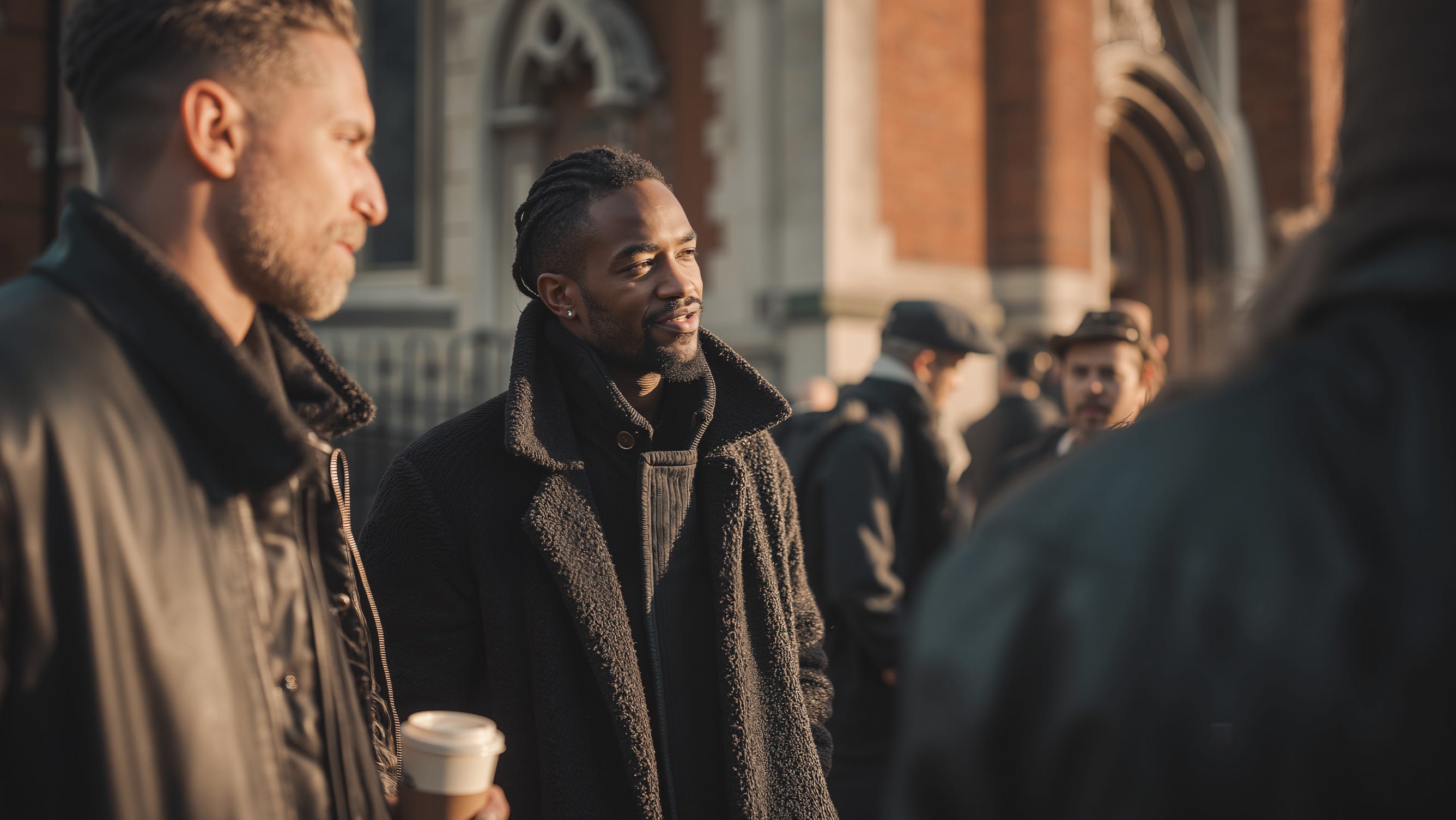
Drawing from informal interviews with eleven Catholic women aged 24 to 66, Dean Patterson uncovers consistent themes that cut across age and vocation. Far from criticism, their responses reveal admiration, longing, and encouragement for men striving to live out God’s plan with faith, humility, and courage.
Key Findings
1. Godly Manhood Is desired, Admired and Recognizable, and Lacking in Some age Groups
Women consistently identified steadfastness, calm under pressure, confidence rooted in faith, and humility as the most admirable traits in men. Those who lead prayer, stay grounded in Church teaching, and protect the dignity of others stand out as spiritual anchors in their families and communities.
2. Women Want Presence and effort, Not Perfection
The most desired qualities weren’t about strength or status, but daily faithfulness—men who pray with their families, open doors, listen well, and take initiative in love. Consistency and small acts of service were seen as more powerful than showy displays of “heroism.”
3. Cultural Confusion Is the Main Obstacle
Respondents noted that men today face real barriers: role confusion, fear of rejection, distractions from technology, and a culture that often sidelines fatherhood and faith. Despite this, the women emphasized that men still carry a unique calling to lead, protect, and provide—roles that remain vital to spiritual and family health.
4. Women See Themselves as Partners, Not Critics, Not Competitors
The women also highlighted their own strengths in supporting godly men: emotional wisdom, forgiveness, and the ability to nurture spiritual life in the home. None of the responses were blaming; all reflected a desire for partnership rooted in mutual respect and shared discipleship.
A Message of Hope for Men
The findings affirm that men don’t need to reinvent masculinity—they need to reclaim it. God’s call for men to lead, protect, and serve remains clear, but its expression begins in ordinary, daily acts of love. “This is the great joy,” the article concludes. “God’s design for men isn’t lost. It’s right in front of us, waiting to be lived again.”
Dean Patterson’s Findings from Focus Group: Women Confirm That Godly Masculinity Is Needed — and Doable
In the last Heroic Man issue, I wrote in some detail about the current crisis of “loneliness and isolation” where so many men find themselves. The causes are many, and their impact on men’s physical, mental, and spiritual wellness is a root cause of personal, family, and community dysfunction, and ultimately, a disruption of God’s plan for us.
Since every woman always has a strong opinion about the men in her life, I chose to informally interview eleven Catholic women of varying ages and vocations to hear what they thought. Their responses were both predictable and confirming: men have work to do to live out God’s call for us.
The real joy I walked away with (and you’re going to get at the end of this): we discover that God’s call for men isn’t something distant or idealized—it’s close, concrete, and absolutely doable.
What these women shared with me wasn’t a list of complaints; it was a kind of hope. They see in godly men a strength that steadies the room, a faith that can anchor everything. They’re not asking for men to be flawless or larger-than-life—they’re asking for men who pray, who protect, who show up, who stay.
First: God’s Plan for Men
Let’s start at the beginning: what is God’s plan for men? At the core, it is simple. Like women, God made man for relationship with Himself and to glorify Him forever.
This overarching purpose is expressed through specific roles and responsibilities in family, church, and society, all rooted in reflecting God’s character and living in obedience to His commands:
Relationship with God:
Man was created for fellowship with God, which was broken by sin but restored through Jesus Christ.
To Reflect God’s Image:
As men (and all humanity), we are made in God’s image and are called to reflect His attributes of love, justice, compassion, and righteousness in the world.
To Be Stewards:
God entrusts us with the responsibility of stewarding and having dominion over the earth and its resources, caring for creation responsibly.
To Be Obedient:
Men, we are made to “fear God and keep His commandments.” We are also called to step out and challenge evil and disobedience.
To Love Others:
This includes loving one’s neighbor as oneself, serving those in need, and showing kindness. As Christian men, we are called even to love our enemies.
To Spread the Gospel:
We are called to share the message of salvation with others — the Great Commission.
Roles Unique to Men
Getting more specific, there are roles unique to men that God expects and equips us for. These are foundational for family and the Church:
Leadership:
Men are called to lead in their homes and in the church. This leadership is not to be lived out in a harsh, authoritarian way, but in humble, self-sacrificial service. God gave us a model: Jesus’ life and His love for us and the Church.
Provision:
Men are responsible for working and providing for the material and physical needs of their households and the Church. Neglecting this duty is considered a denial of God’s call to us.
Protection:
Men are to guard their family and community physically, morally, and spiritually. This is getting harder, since the enemy doesn’t play fair here. Just consider the threats to our own moral and spiritual purity posed by the internet and a permissive culture.
Protection now includes guarding our own hearts in order to serve our families and communities.
Fatherhood and Mentorship:
Fathers have a key role in raising their children in the “discipline and instruction of the Lord,” teaching them God’s ways and modeling a godly life. This principle extends to mentoring younger men in the faith within the wider community.
This too is harder given the number of single-parent households.
Husband:
For men called to marriage, a husband is to love his wife as Christ loved the Church — being willing to sacrifice himself for her well-being and treating her with understanding and honor as an equal heir of the grace of life.
Overseer promoting Accountability:
We are ultimately accountable to God for the welfare and spiritual growth of those in our family and the communities where God has placed us.
This is the greatest emphasis for Heroic Men — building Christian brotherhood in a way that grounds us to fulfill all our roles as godly men.
In essence, God’s plan calls us men to courageously live lives of purpose and love, wherever God puts us.
We are called to be men who reflect the redemptive work of Christ in a fallen world.
Knowing the Plan Isn’t Enough
In all humility, you might add or elaborate on the purposes and roles God intended for us men. I’ve tried to keep things obvious and true to Church teaching.
But knowing what is expected, while essential, is only a first step — and guarantees nothing.
We have an enemy actively targeting our souls to undermine God’s plan for our families and churches.
Ultimately, while we trust God as sovereign, and know that anyone or anything opposed to Him cannot prevail, the carnage and cost of the battle are enormous and painful.
God has uniquely made us men to be part of the solution — to reclaim and live out God’s call.
We need to urgently accept and pray about our personal role as men of God, and how each of us can be part of God’s plan and solution.
Admittedly, there is so much more that could be said.
What follows is a brief summary of what I learned when I interviewed a group of eleven Catholic women — and what we can all start, stop, and continue doing to live closer to God’s plan and purpose.
Again, this isn’t comprehensive, but I hope it’s worth praying about and acting on in our own circles.
Here’s what the Women Said
The women I spoke with ranged in age from 24 to 66. Five of the women are about 30 years old or younger. The other six are over 50, and all are currently single. The six older women I spoke with are married for decades and have adult children.
Naturally, perspectives and observations both converged on some themes and differed on others. In these discussions, I mostly asked four questions:
What do you admire most about the godly man or men in your life?
What do you want most from a godly man?
What challenges do you see that make it hard for men to be godly?
What gifts do women bring that can help men live out God’s plan and purpose?
1. What Women Admire Most in Godly Men
Steadfastness: A man rooted in faith who doesn’t get rattled by people, demands, or struggles. They valued his calmness.
Confidence and Humility: He understands who he is in God’s eyes and lives out that identity in his work and personal life.
Leadership: He leads his life and attracts others easily; people trust him.
Conviction: Standing strong in what the Church teaches gives others courage.
Faithfulness: Godly dads or husbands who embrace Church teachings inspire women to learn more and strive to grow.
Purpose: They admire men who live with a deeper purpose than this world offers — men who seem more joyful and grounded.
Protection: Women appreciate how godly men look out for them, especially single women.
2. What Women Want Most in a Godly Man
A man who brings God into the relationship. When he embraces his godly masculinity, it allows her to embrace her femininity.
A man who practices daily, humble acts of care — walking her to the car, opening the door, putting the kneeler down, checking the locks at night.
A good, open-minded communicator willing to listen and even change his mind. She wants him to give full attention and value her perspective.
A man who leads prayer and keeps God at the center.
A friend or husband who is steady, strong, dedicated to figuring things out, pursuing the sacraments, confession, adoration — a man with a tangible relationship with Christ.
A man serving family, Church, and community as God intended.
3. Challenges Godly Men Face Today
Feminism and Role Confusion: Feminism, while important, may have gone too far. Some men feel unneeded or intimidated, fearful to take initiative or maintain leadership in their homes.
Relational Fear: Women can be impatient or demanding; men fear being wrong or turned down and may shut down.
Technology: It distracts from communication and connection — phones replace face-to-face time. They can also serve as a source of mindless entertainment.
Role Overlap: Women often step in to “fill the holes,” unintentionally undermining men’s participation. At times, men may retreat and let women lead.
Entertainment Escapism: Technology and sports make it easy for men to stay home, gaming or watching instead of engaging with family.
Eroded Identity: Women’s self-sufficiency can limit men’s space to contribute. Couples end up competing instead of complementing.
Blurry Roles: Both men and women are confused. Men need time and space to act; women need to ask, allow, and encourage.
Service Dynamic: When a husband serves and takes initiative, women feel loved and respond with love. Culture has emasculated men; the pendulum has swung too far. Men have lost their sense of identity and role.
4. Strengths Women Bring to a Godly Relationship
Women bring spirituality into the home and help set the tone for faith and prayer.
They offer emotional maturity and wisdom — often knowing what to say, or when to stay silent.
They forgive easily and help repair conflict, modeling mercy and grace
They carry self-awareness of their reactions and a humility that restores relationships.
They are loving and devoted to God and family, even through emotional ups and downs.
They give men permission to open up emotionally — something men rarely find at work or with friends.
What We Can Learn
Catholic teaching about what a godly man is — and is made for — should serve as a reminder or reset if we’ve forgotten or never really considered it.
Roles like “protector,” “provider,” and “leader” are clearly where God wants us, and women want us as well.
Yet, given today’s loneliness and isolation, too many men are retreating into their man-caves and withdrawing from their God-given mission. We aren’t helping our case for living for God.
I believe God has built us to not just serve but also to solve this crisis — if we can step back into our families, workplaces, and churches, and trust His plan for us. Don’t forget to “brother-up” when you see guys in this pattern, or mentor those who may never have had a role model. Remember, women aren’t obstacles. God has a plan for them too.
When looking over the interview responses and reflecting on the conversations I had with these women, none of the women I spoke with shared their thoughts in a blaming or shaming way. Their spirit of empathy was consistent with the gift that women often bring. That allowed them to point out what they admire, what they desire, and what challenges they see — all to help us be part of the solution.
This survey wasn’t scientific — eleven women is a small sample size, and they represent a narrow demographic of practicing Catholic women. A survey of secular women would likely bring some different themes.
I hope seeking and sharing God’s plan for men — alongside the perceptions of godly women — is a good place to start. It’s also where we can pray and reflect on whether each of us is doing all we are called to do in order to live out our God-given nature and essential role in His will.
Call to Action: There is so much at stake, and the mental, physical, and spiritual costs are clear and dire for men who are going solo in this life. Our call to action need not be intense or overly demanding. As one woman said, “small things done with intent and love” will make a difference.
Today, in quiet prayer, reflect on what God needs from you.
Ask Him to guide you to grow as a leader at home, in church, and in your community.
Then take a courageous step: ask the women in your life how you’re doing.
Bring the list of God’s plan for men — and your sense of women’s role and needs — to your trusted brothers in Christ.
The rewards? Our growth as men living in God’s plan always bring us, and those we love, greater peace, joy, and hope.