


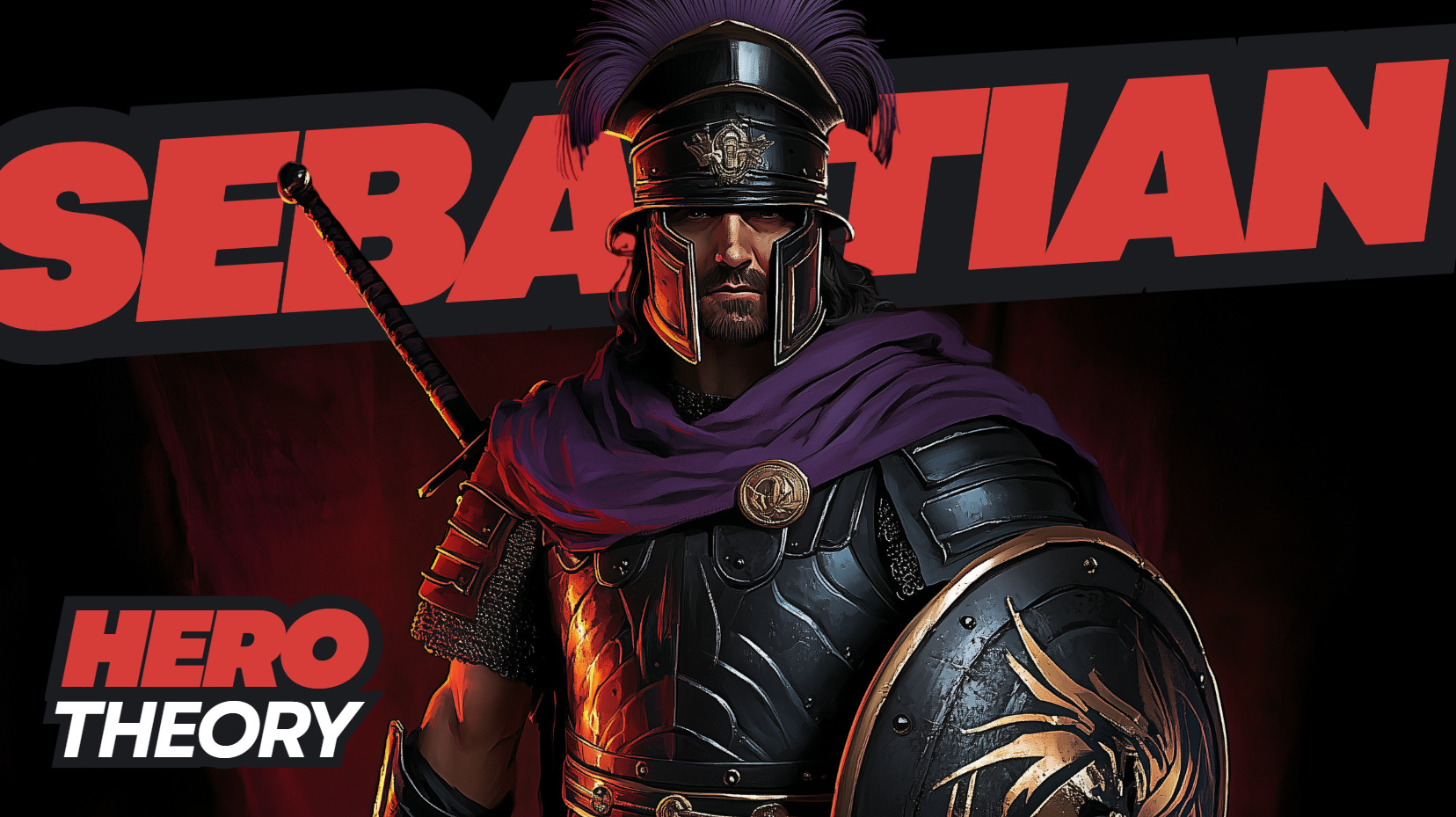
Sebastian was trained as one of Rome’s most dangerous men: the Praetorian Guard. Eight thousand elite soldiers, handpicked from across Italy, paid three times the wage of a legionary, drilled until their faces were stone.
They weren’t just warriors; they were the emperor’s shadow. To be Praetorian was to live in a furnace of loyalty and paranoia. They guarded the most powerful (and often whimsical) man-gods in the world, knowing he might order your death before sunset.
The Guard had a long record of king-making. Claudius was hauled from hiding in a palace hallway and proclaimed emperor by the very Praetorians who killed his nephew. After they murdered Pertinax, the Guard did something that horrified the Senate—they auctioned the empire to the highest bidder (Didius Julianus). That memory never left Roman political culture.
You could command 20 legions on the Rhine, but if the Guard inside Rome turned against you, you were finished before the frontier generals even heard the news. So emperors lived in a paradox. They doubled the Guard’s pay, showered them with gifts, built them a walled camp inside the city—the Castra Praetoria—yet never trusted them.
That was Sebastian’s life. Discipline in every gesture, sword always in reach, silence mastered like an always-on SEAL Team 6. The Castra Praetoria was its own city inside Rome. Every man there knew the truth: emperors feared them as much as they trusted them. The Guard had murdered emperors, auctioned the throne, and turned dynasties to dust when a powerful leader united them. Power and suspicion pressed on them like armor that never came off.
Now imagine being a Christian and an officer in that cage. Sebastian wasn’t a desert father. He wasn’t a Christian farmer hiding in catacombs. Some sources say that he deliberately enlisted to act as a sleeper for the resistance, and help Christians where he could. He slept in the palace, armored up in the barracks, and stood beside Diocletian himself. He and his brothers in the Guard him kept safe the pinnacle of Rome’s power. But he’d promised his soul to Christ. That double life probably tore at him. In the heart of the world’s greatest empire, guarding the back of a brutal god-king, a Praetorian couldn’t shake his conviction that Christ rose from the dead, the Kingdom of God was at hand, and the Beatitudes were a call to holiness.
That takes nerves of iron. Every day was a rehearsal in courage, every prayer a silent mutiny, every march to put down a problem a challenge to his duty and his faith. Perhaps he hoped to keep his mouth shut and keep it all a secret.
We’ll never know for sure, but stories from the 11th Century say he was secretly strengthening Christians awaiting martyrdom. We can imagine him in the shadows under the Coliseum, encouraging them not to recant. He even converted others inside the Guard.
That’s was the breaking point. Diocletian learned that Christianity was festering inside the Praetorians, a wildfire his Edict of Persecution promised to stamp out.
The order came down. Tie him to a post in a public field, turn him into a warning. According to Roman law, every condemned criminal must be buried. It seems Sebastian was condemned with the highest form of treason: denial of burial.
They stripped him of his Praetorian armor. He’s a man lashed upright to a post, wrists bound behind him, chest bare to the air. The very soldiers he once drilled beside now form a ring around him, faces impassive, bowstrings groaning under tension. And they fire.
The air fills with the hiss of arrows. Imagine the body of this Praetorian officer turned into a pincushion, his torso bristling like a shield full of broken spears. His brothers-in-arms form up, turn their backs on him, and march off. They will leave him for the sunlight, the vultures, and for a slow, grisly death.
But somehow he survives.
Did his soldiers miss vital arteries and organs on purpose?
Did the Christian woman who found him after dark, Irene, have miraculous healing powers?
It seems unbelievable that he would live, and yet he did.
After some unknown period of time, his wounds probably close up, and he now has a choice what to do with his mangled life. He could have disappeared. He could have taken that second life and vanished into the underground church.
Instead, he limps back into Rome. Tracks down Diocletian in a public place, and perhaps on the stairs of the Palatine hill, challenges him for persecuting Christians. I would imagine his voice that once roared commands, now found a way to roar again, despite the scarring through his windpipe and shot-up lungs.
Diocletian would have to assume he resurrected from the dead. He swiftly orders that Sebastian be recaptured, bludgeoned to death with clubs (so that any resurrection would be impossible), and then thrown into the Cloaca Maxima, the great Roman sewer fed by latrines and waste water, specifically to prevent Christians from retrieving and venerating it.
And even then, a Christian woman hauled out his body and safely secreted him in the catacombs on the Appian Way.
The Sebastian Challenge
Sometimes you don’t get to quit the job, walk out of the system, or tear down the walls. Sometimes life pins you where you are, and you feel stuck. But that doesn’t mean you’re powerless. It means the battle shifts inside.
The habit is this: pick one practice that’s yours alone: prayer, journaling, cold water, push-ups. Do it daily, and don’t let anyone know. That’s your hidden allegiance. Every time you practice that rep, you prove to yourself that you’re in control of yourself, and your inner life. You’re not a pawn of the emperor, of the algorithm, or someone you resent. You belong to something higher. You are a son of the Father.
Interior freedom starts from ordering your soul when you can’t order your circumstances. Start small, guard it fiercely, and grow into it. Because one day the arrows will come, or the moment to confront power will arrive, or the moment to leave will happen. Many of us miss the opportunities to do good, because we’re numbed out.
You’ll need to know and feel that you are already free, and you’re paying attention.
Sebastian had that freedom.
You can train it, too.
About Hero Theory
Hero Theory isn’t about being the toughest guy in the room. It’s about being the most ready—ready to do the right thing when no one else will. Ready to speak up, step in, and stand firm, even if your hands are shaking. All it takes is 20 seconds of insane courage to change a moment… and maybe even your life.
You can practice that kind of courage. Let's explore what that looks like: the habits, the mindset, the mentors, the fictional heroes and the real-life ones. So when your moment comes, you don’t hesitate. You act. Because that’s who you’ve trained to be.
Thank You God for the example of Sebastian, and thank you Dominic for sharing his story