


On August 16, 1977, Elvis Presley was found dead on his bathroom floor. His seemingly sudden death stunned America. He was only 42, and one of the biggest music icons in the world.
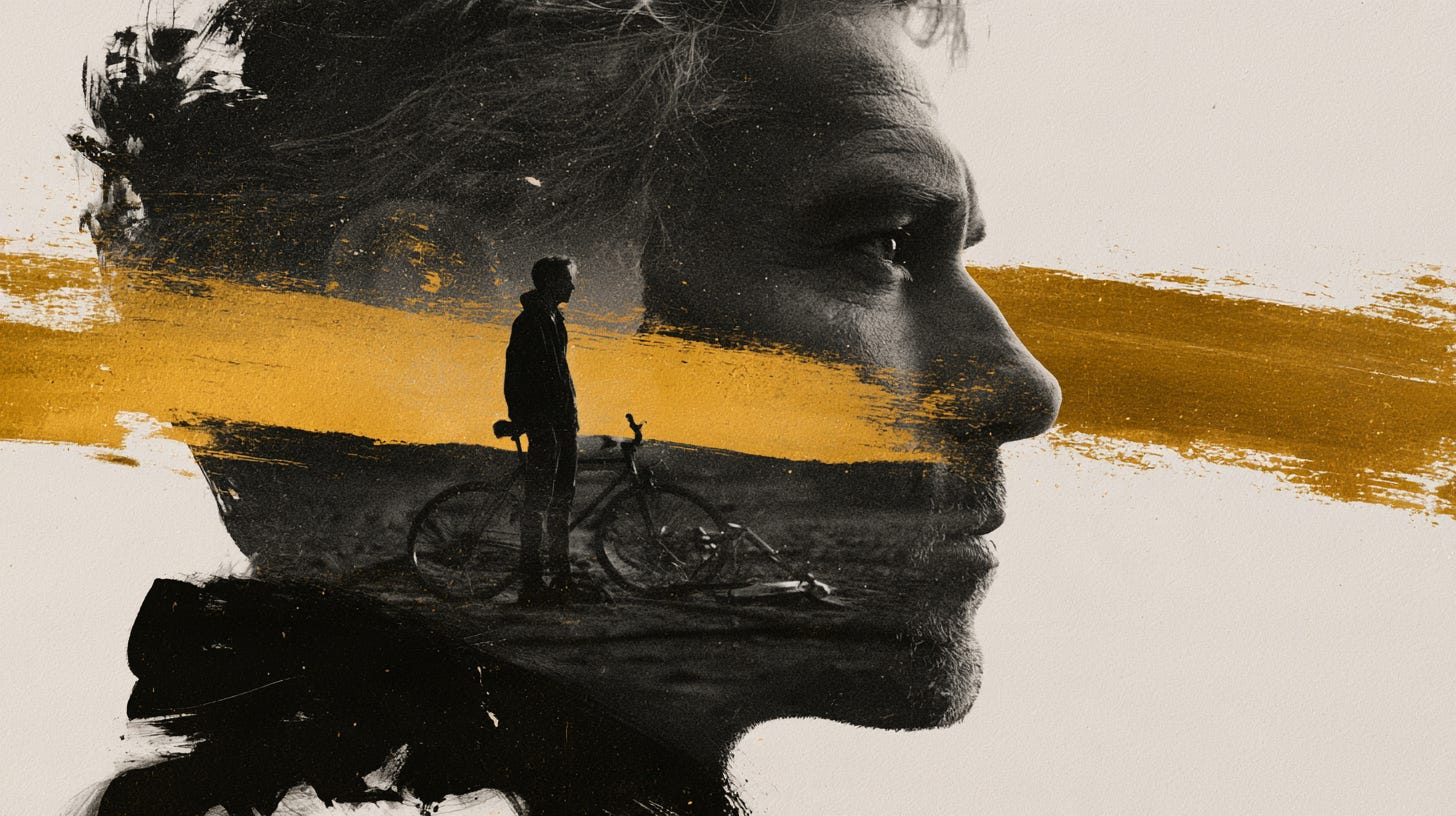
That same morning, I was a 15-year-old football player on my Motobecane Mirage 10-speed, riding with two buddies to the first practice of the day.
In our suburban Milwaukee town, we waited at the only intersection for our light to turn green while commuters heading downtown whizzed by in front of us.
The light turned green, and I was the first of us to pedal through the intersection toward the school fields, about a half-mile away.
Almost immediately, one of my friends screamed for me to stop.
That’s when I almost joined Elvis.
A commuter, blowing through the now-red light, struck me broadside. Miraculously, the car hit my front fork and wheel and my left hand clutching the handlebar.
In that instant, I truly felt as though I had been pulled out of the way.
Witnesses said I shot straight up into the air on impact. The police told me several times how differently this could have turned out.
Six inches further into that intersection, and the collision could have killed me.
It was not my day to meet Elvis.
The next 30 minutes gave me a lot to process. My bike looked like a pretzel. My left hand swelled like a softball. My right leg was badly bruised and knotted up just above the knee where the bike frame caught me during the collision.
Despite all of that, I had an incredible sense that I had been spared from something horrific—and that my friends, my family, and even the driver had been spared a tremendous amount of pain.
A ride in the “meat wagon” took me to St. Luke’s Emergency Room. My parents were notified, and my dad drove in from downtown, where he was already at work.
Somehow, I was going to be okay. No broken bones—just a lot of contusions and a growing sense that somehow I had been supernaturally saved.
My dreams of earning a varsity spot as a sophomore were toast. I was grateful simply to be alive.
A Lesson in Perspective
Men of virtue in our lives can teach us much about how to conduct ourselves as a father, employer, friend, or mentor. My dad did that for me nearly 50 years ago.
All of this drove me to the Bible for the first time. I began reading and reflecting each night. I kept thinking about that feeling of being “pulled up.”
Was that the presence of God? Was it my guardian angel?
Nearly 50 years later, I am more convinced than ever that my guardian angel was on the job that morning.
But as miraculous as the outcome had been, something changed as football season ended and the holidays approached.
I began to get angry.
I would never get those weeks back when I had to sit out and recover from my injuries. I had lost my bike—one I had purchased with money I had earned. The driver received only a ticket and a $52 fine.
The awe and gratitude I initially felt were gradually replaced by a desire for revenge and a victim mentality.
I adopted the mindset: “This is not fair.”
My family was not affluent. My dad and mom, both devout Catholics, had each grown up dirt poor. Admirably, both became the first in their families to earn college degrees.
My dad also served in World War II during his college years, delaying the start of his career. Our family of six lived in a small three-bedroom rambler. We never had luxuries, but we had what we needed.
At some point that fall, the father of a friend asked me about the accident and how everything had turned out. He seemed surprised that no monetary settlement had come my way.
That was all I needed to hear.
I started bugging my dad about getting justice. I began thinking about what I could buy with the money.
It was time to exact some justice.
My Dad’s Response
My dad was a quiet man. Stoic would be a good way to describe him. He was never one to brag, even when he won a golf or bowling tournament.
He rarely spoke about his military service, even though it had a dramatic impact on his life. Most nights at 9:30, he prayed on his knees next to his bed, and there was no point in trying to interrupt him.
He was the founder of our local VFW post and served as its first commander for years. Most importantly, he loved his wife and family in every way.
One Saturday morning, I found him reading the newspaper. I saw my opportunity.
I made my case for pursuing a settlement—a little monetary justice, I thought, for the consequences I had suffered because of the driver who had gotten off so easily.
In my mind, it was a winner: common sense, little risk, and potentially a high reward.
Dad listened.
As usual, he didn’t react much.
I remember getting angry at his lack of response, so I made my points again.
“Don’t you see how unfair this is? Mike’s dad said he can’t believe we didn’t go after a settlement.”
That’s when my dad gave me a lesson I have drawn upon ever since.
I remember his response like it was yesterday.
“Dean, you aren’t wrong about this whole thing. She ran a red light, and you did pay a price for that. But you need to remember how it really turned out.
“You’re okay.
“People make mistakes. You will, and others will. That’s just how it goes. It’s going to happen. It could have been so much worse, and we all know that.
“That is the best thing. No money is going to come close to that.”
I protested.
But Dad made his point again, and I knew it was game over.
Later that morning, he came into our TV room. I was pouting while watching some show. For once, he spoke first.
“Just so you know, your bike and medical bills are paid by her insurance. You even get a couple hundred dollars besides. Okay?”
I didn’t immediately accept or fully understand all of this.
But over time, I came to understand exactly what my dad had taught me.
The Priceless Lesson
Letting this go and moving on kept me from allowing my thirst for revenge and money to feed a victim mentality. If I had pursued the situation simply because I felt I deserved more, I might have reinforced a mindset that could easily be repeated the next time I experienced an injustice.
My dad understood something much deeper.
He understood the power of forgiveness.
He understood that as Catholic men, we are called to forgive. He also understood the importance of gratitude and perspective. What mattered most was not what I had lost, but what I had been given back: my life.
I have grown to treasure the perspective my dad had and the leadership he showed me—all grounded in his Catholic faith.
Nearly 50 years later, I still remember his words.
Revenge and money would have been nice.
But the life lesson was priceless.
Praise God, there are a lot of good men out there. Men who remind us that what we say and do matters. Men whose virtue quietly shapes the lives of others.
Young men and old men are hungry for that example.
So, think about the good men God has placed in your life. Who showed you how to live? Who taught you about faith, responsibility, forgiveness, courage, or love?
Give thanks for those men.
And then ask yourself a more important question:
Are you that man in someone else’s life?
Maybe there are men out there who need the little life lessons and wisdom that you have to share. Maybe just one.
Is there a way you can show up for them?