


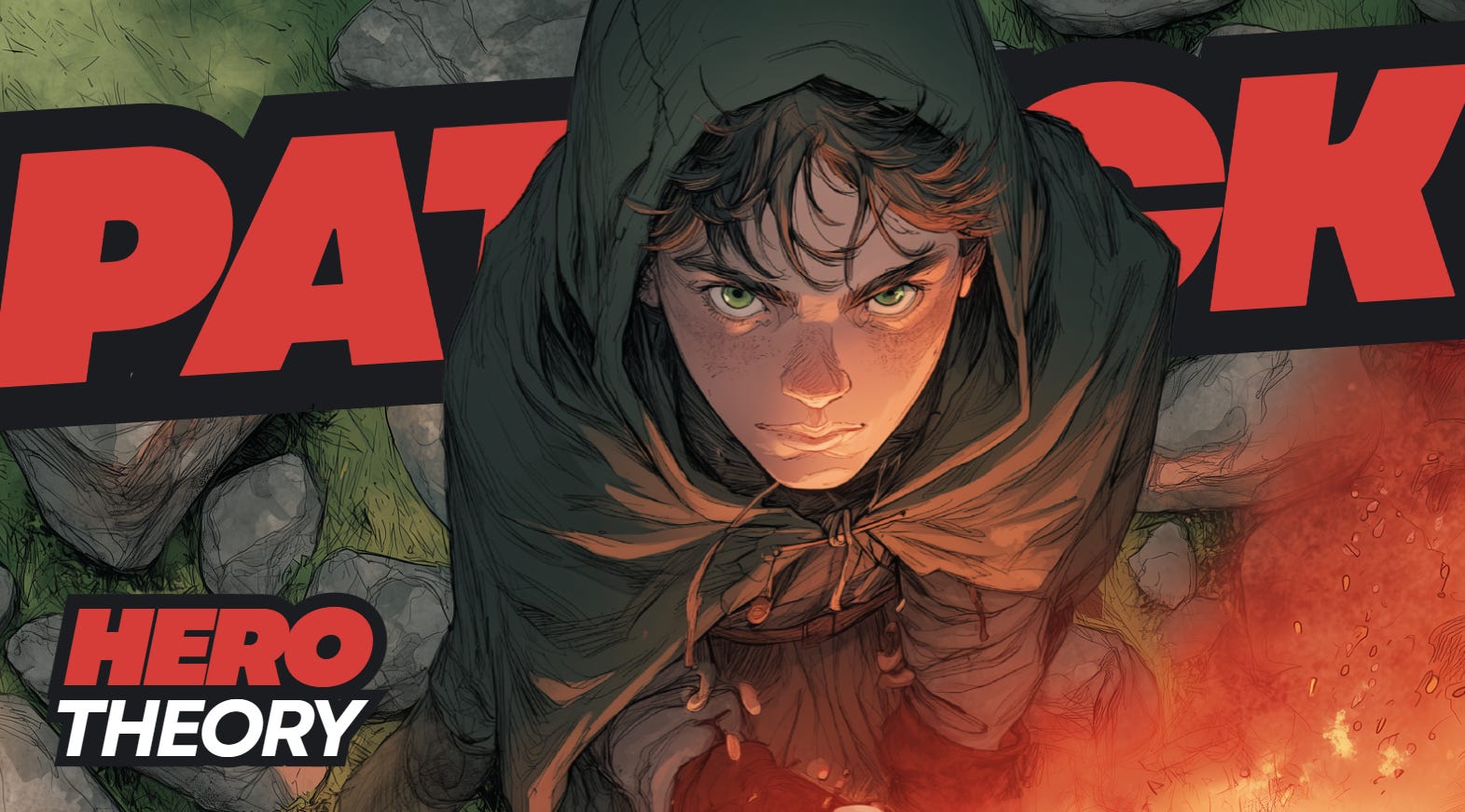
Patrick wasn’t born Irish. He wasn’t even born a saint. He was a spoiled teenager on the coast of Scotland, the son of a comfortable Roman family. He had servants, an education, probably thought life was supposed to unfold like a banquet—always more food, more fun, more future.
And then, one morning, Irish raiders hit his town, burned homes, chained kids. Patrick was shackled and tossed on a boat. By the time he staggered through the surf onto the shore of Ireland, he faced nothing but a hellish future.
He was now a nobody. A slave. He herded animals on cold hillsides, rain soaking him to the bone. Alone, hungry, forgotten. His old life was gone.
In those brutal years of silence, misery, and isolation, Patrick found a fire. He started to pray. This wasn’t polite prayers, or occasional hopeful prayers, but a kind of intensity that comes when your soul’s got nothing else to cling to. They say he prayed hundreds of times a day, until the presence of God became as real to him as the rain on his skin.
More than that, he stopped feeling the bite of ice, the grip of the wind, and the burn of the sun. Thousands of miles away in the Himalayas, monks would practice a incredible discipline (and continue to this day), sitting near-naked in the driving snow all day, and never lose their meditative peace.
Patrick somehow figured out a similar discipline by himself: he hardened on the outside, and softened in his soul to the reality of God through constant conversation.
After six years, he dreamed of a way out. A voice told him a ship was waiting. He escaped, trekked across Ireland, and somehow found that ship. Against all odds, he made it home.
Most men would’ve stayed home. Built a safe life. Invested in better sea defenses. Tried to forget the nightmare. I bet he had a hard time staring out across the steel-colored waves for a while. Or maybe most men would have rallied an army and rushed over to sack the towns, so that they couldn’t attack them again.
The world was sensitive at this time. Two hundred years ago, the Roman world had been horrified by a slave rebellion, an uprising led by Spartacus that had marshalled tens of thousands of angry slaves, brutally put down by Roman legions and hiked up high on crosses. But Rome wasn’t ascendant any more.
Maybe a freed slave could rebel, and lead a rebellion again.
But all that time in prayer seems to have left Patrick porous to more dreams. They came back. He doubled down on studies to understand Christ and God and the cutting edge of spiritual discipline. He became a bishop.
And this time he didn’t dream of escape, but of going back. The Irish, the same people who had enslaved him, were calling him back. They begged him: “Come walk among us again.”
Why go back to the people who broke you? Why risk chains again?
Because Patrick wasn’t the same boy who’d been carried off. The suffering had burned the shallow stuff out of him. He’d met God now, and he couldn’t look away.
He stepped off that boat into the land of druids and kings and warriors, and he carried only a hope that he could do an insane amount of good. And the stories tell us how strongly God was on his side, dropping miracles right and left to preserve his life from violent men.
The wildest thing is that Ireland changed. The nation of his captors became the nation he loved. His hillside time became a pilgrimage in his mind, six years of silent study of the Irish ways and their Irish gods. He understood how to call out their hunger for God hidden between the lines of their traditions and their festivals.
He baptized thousands, trained leaders, converted chiefs and clans. He lit a fire that turned Ireland into one of the spiritual powerhouses of early Christendom. Monks from Patrick’s Ireland would later carry the gospel across Europe, keeping learning and faith alive while the Roman world crumbled.
The Patrick Challenge
Patrick wasn’t praying because it was polite. He wasn’t checking a box before meals. He was desperate.
Alone on the hills with sheep, no friends, no family, no hope of rescue—he turned every breath into prayer. He says he prayed a hundred times a day, and through the night. And somehow, in the snow, in the rain, barefoot in the frost, he says he felt no hurt.
Prayer strengthened his soul into steel.
Here’s the challenge: set an anchor prayer into your day until it becomes automatic. Maybe it’s a short psalm every time you get in your car. Maybe it’s the Lord’s Prayer when you hit “send” on an email. Maybe it’s murmuring, “Lord, have mercy,” on the walk between meetings.
Pick one prayer and lock it in. Do it every day until your body expects it, like breathing.
Habits stack on top of each other. One small prayer, repeated, becomes twenty, becomes a hundred.
When the storm comes, when you’re stuck, hurt, and in a place where you wish you weren’t, you won’t be scrambling to talk to God. Asking him to guide you and be involved in your decisions will be the default.
You have no idea what might happen, or the impact you might have.
Download the 'Hero Theory' e-book: 25 short stories to inspire young men to seek heroism

Young men today feel stuck in training mode in a basement: unwanted, lonely, and unprepared when life demands courage.