

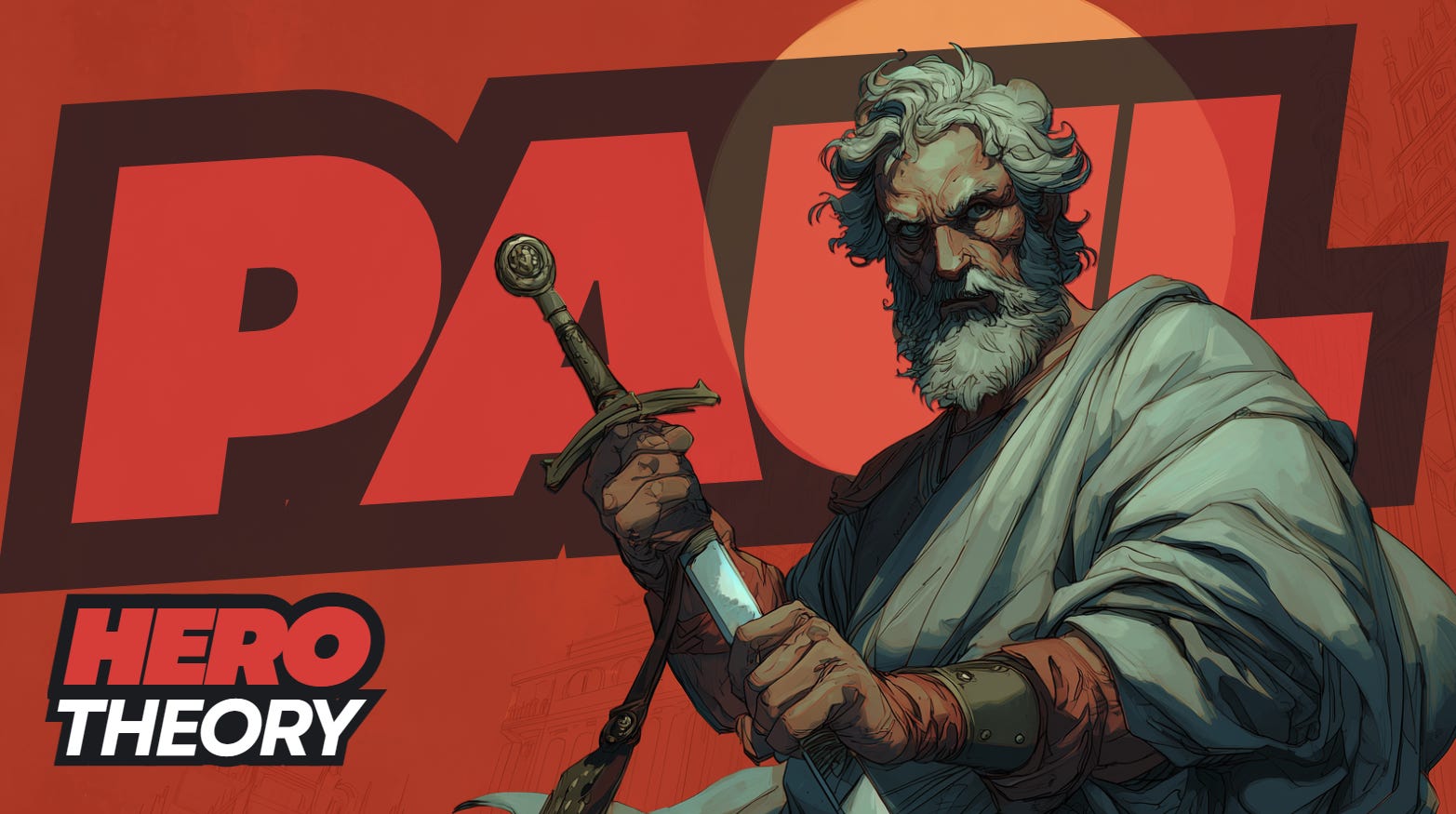
Saul of Tarsus, the rising star of religious zeal, is storming down the road to Damascus. He’s got fire in his veins, a hunger for blood, and a hit list of Christians he’s ready to drag back in chains.
In his mind, he’s God’s hero, doing God’s work, and his path is unstoppable. Anointed. He’s got a shining career.
And then—blinding light crashes into his eyes, like a waterfall exploding from the Holy of Holies.
Knocked flat on his back, breathless, the gravel grinding up into his skull.
A voice calls from the blaze: “Saul, Saul, why are you persecuting me?”
This is the moment everything changes. The hunter becomes the hunted. The man who saw everything so clearly is suddenly blind, helpless. He can maybe feel the crust of scales sealing up his sight, and horrified, he can do nothing.
But what’s worse is the message. And he knows who’s speaking to him.
It’s a suckerpunch, and tail between his legs, someone leads him by the hand into the very city he thought he would conquer. Probably through a side gate. Probably holding a shared staff, a shared food bowl, a shared waterskin.
I don’t know about you… but most of us hate being wrong.
We’ll double down on bad decisions just to save face. We’ll defend our mistakes to the death rather than admit we misjudged.
Paul didn’t even get that option.
He had to live three days in the dark with nothing but his thoughts, realizing everything he’d built his identity on was wrong. He thought he was the hero—turns out, he was the villain.
That’ll mess with you.
But here’s what makes his story heroic: he didn’t stay down. He didn’t wallow. He accepted the call to adventure, to a whole new life.
When Ananias showed up, laid hands on him, and the scales fell off his eyes, Paul abandoned all his old alliances, and vanished into the Arabian desert for three years.
The persecutor became the apostle. The destroyer became the builder.
Here’s the lesson: don’t be afraid to be wrong.
Sometimes the only way forward is through a collapse. Sometimes the bravest thing you can do is admit that the road you’re on is killing you, and let yourself start a different story.
We tell stories of men who double down on the wrong path. Who get messages, heroes, accidents, everything plus a piano dropped on them from a second story building.
These men cannot admit they need to change. And they create hell around them out of the hell in their hearts.
Here’s your ‘Road to Damascus’ Challenge:
Practice small acts of reality.
Every day, ask: Lord, where might I be wrong today? And if an answers limps out into the light in your mind, accept it.
And then don’t do it again.
It’s a dangerous prayer, but it’s the kind that keeps your heart open and your eyes scale-free.
Write it in a journal. Ask it in prayer. Say it before you open your mouth in an argument and let slip the harsh thing.
The man who can admit his mistakes is the man who’s free, truly free.
Paul’s story is about courage.
He had the courage to let go of the life he thought made him powerful. He was like a John Wick, knowing that conversion put a target on his back for the next Saul with hell in his heart and a gun in his hand for vengeance.
Returning with a Gospel message among his former employers was a death sentence.
Few can take up that challenge. Few of us today are called to it.
But that’s the invite: the courage to be real. Maybe we can be half the hero he was.
We’re invited to stop pretending we’ve got it all figured out. To stand up as a new man, even if some old part of us has to die on the road.
Maybe the bravest twenty seconds of your life will be the moment you stop fighting the light, and finally let it help you see reality.
Download the 'Hero Theory' e-book: 25 short stories to inspire young men to seek heroism

Young men today feel stuck in training mode in a basement: unwanted, lonely, and unprepared when life demands courage.